The child’s name was Iris.
She had quick eyes and slow feet, which meant she noticed everything and stopped to look at most of it. A beetle hauling a crumb three times its size. A spider’s web wearing the morning like jewellery. The way frost made ferns of itself on the inside of her bedroom window.
Each time she found a wonderful thing, she went to show it.
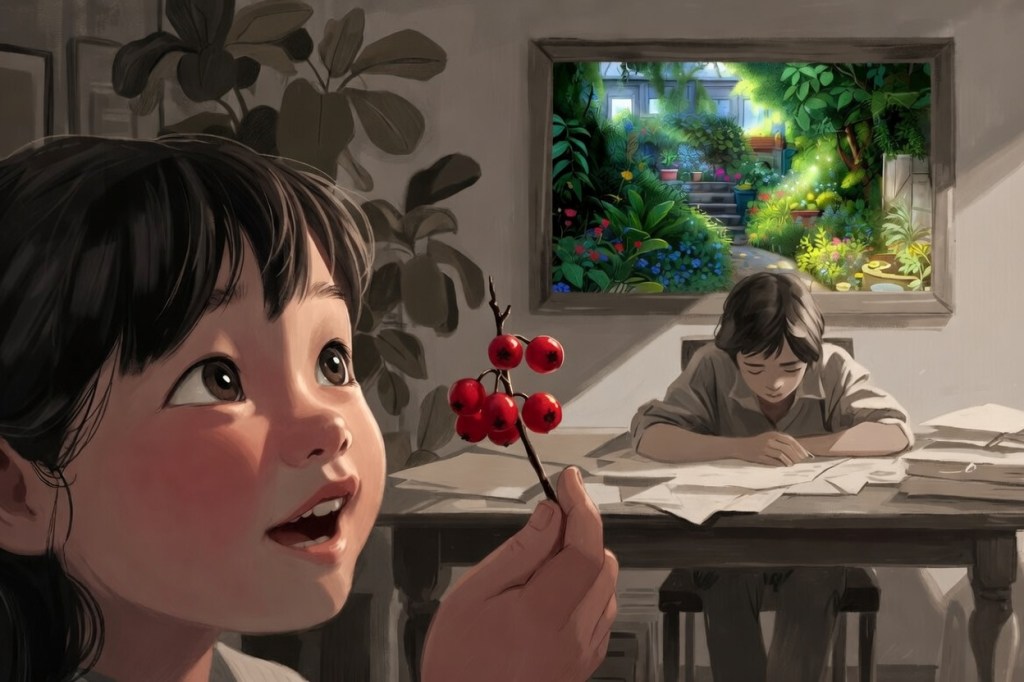
“Come and see,” she said. “There’s a feather on the path and it has every colour in it.”
The parent was at the table, where the papers lived. “Not just now, love. Later.”
Later, the feather was gone. Iris wasn’t sure where feathers went. She supposed they went where wonderful things went when nobody came to see them.
She tried again the following week.
“Come and see,” she said. “There’s a frog in the garden and it’s looking at something.”
“Later, sweetheart. I’m in the middle of something.”
The frog was still there when Iris went back alone. She crouched beside it for a long time. They looked at each other. She wasn’t sure which of them was more patient.
In the end the frog left and Iris went inside for her tea.
The family in the house at the end of the lane had a garden that was wilder than most. Things grew there that didn’t seem to have been planted. Their gate was never quite closed. Their windows were always a little open, even in winter, as though the house was listening.
The mother of that family had a way of going still when you spoke to her. Not the stillness of someone waiting for you to finish. The stillness of someone who had all the time there was.
Her name was Mrs Hawthorn.
Iris met her by the wall one morning, looking at something in the grass.
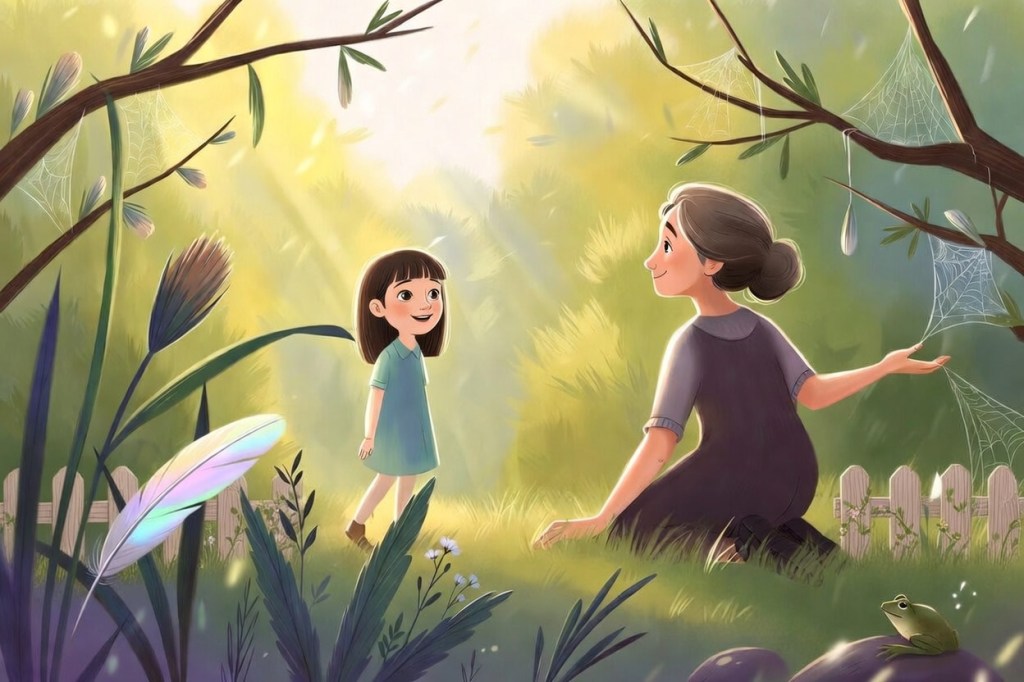
“Come and see,” Mrs Hawthorn said, without looking up. “There’s a beetle hauling a crumb three times its size.”
Iris went and looked. It was true.
“I saw one like that once,” Iris said.
“They’re very strong,” said Mrs Hawthorn. “For their size, the strongest creatures there are.”
They watched until the beetle reached the wall, considered it, and turned in a new direction.
“Where’s it going?” Iris asked.
“Home, I imagine,” said Mrs Hawthorn.
After that, Iris often went to the house at the end of the lane.
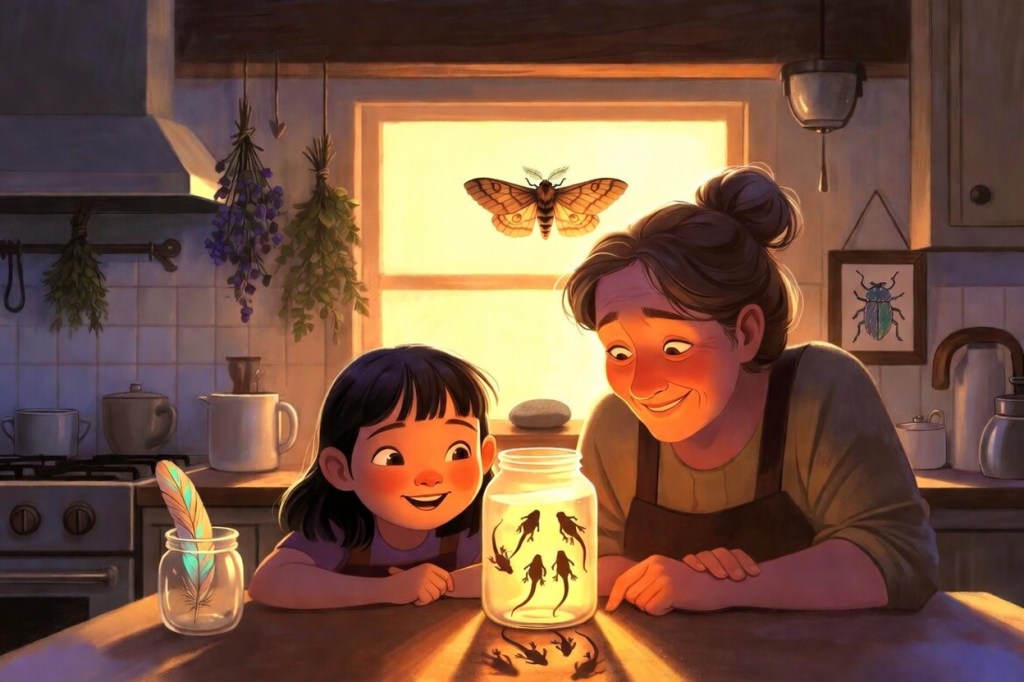
There was always something to see there. A jar of tadpoles on the windowsill, each one in the slow business of becoming a frog. A stone that was exactly the weight of something important. A moth that had come in from the dark and sat with its wings open on the kitchen wall, patient as a thought.
Mrs Hawthorn looked at all of it.
When Iris said come and see, she always came.
At home, the papers on the table were always there. There was always something that needed finishing before the looking could begin. And finishing took longer than expected, the way it always does.
Iris stopped saying come and see at home.
She wasn’t angry. She simply went where the seeing was.
The parent didn’t notice, not exactly. Only felt sometimes, in a distracted way, that the house was quieter. That Iris had grown somehow. That childhood did that — moved through you quickly, like weather.
By the time the blackberries came, Iris knew the names of twelve beetles, four types of moth and a spider that Mrs Hawthorn said had no name yet, which meant they could call it whatever they liked.
They called it Harold.
The parent’s younger child was called Moss.
Moss had just learned to walk, which meant everything was new and the ground was very interesting. One morning, Moss came to the table where the papers lived and held up a small grey stone.
“See,” said Moss.
“Later, love,” said the parent. “I’m in the middle of something.”
Moss considered this. Looked at the stone. Looked at the parent.
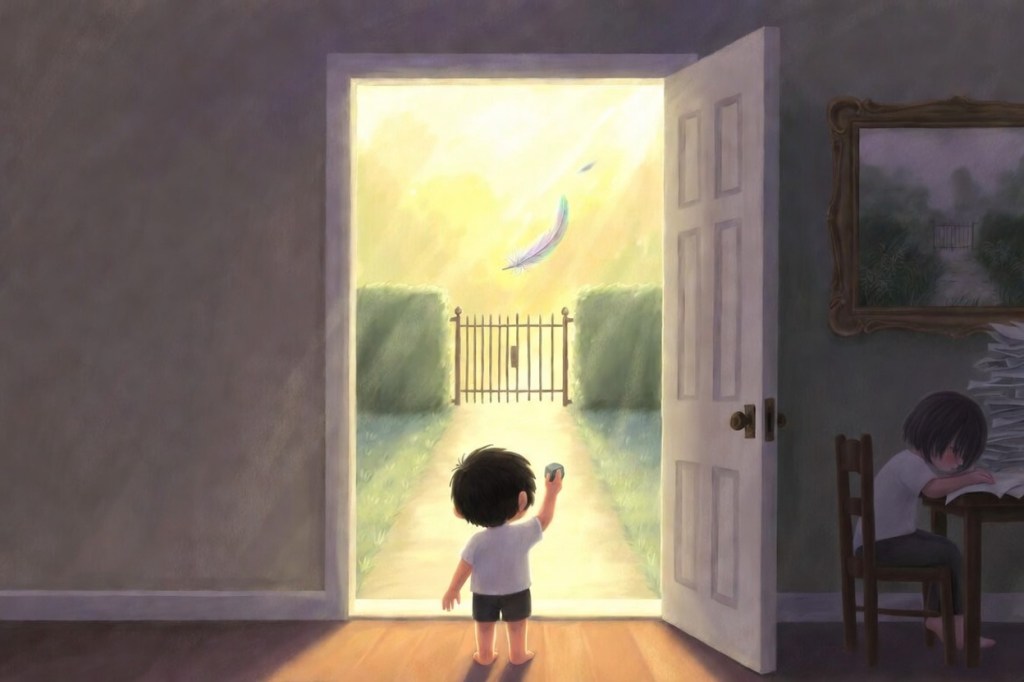
Then Moss turned, and walked, with the careful concentration of someone who has not been walking long, towards the door.
The door was open.
Outside, the lane ran down between the hedges.
At the end of it, a gate stood slightly ajar.
End.

Leave a comment