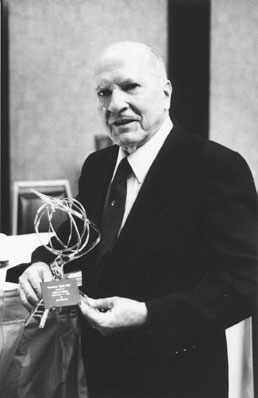
Robert A Heinlein imagined future gadgets, sure, but he grasped something more fundamental: technology changes who we are as much as what we do. Writing decades before smartphones and social media, he saw how innovation would reshape human relationships, work and society itself. These five stories show his uncanny ability to predict not just the technology, but the human consequences.
1. “Waldo” (1942) – Remote Work Revolution
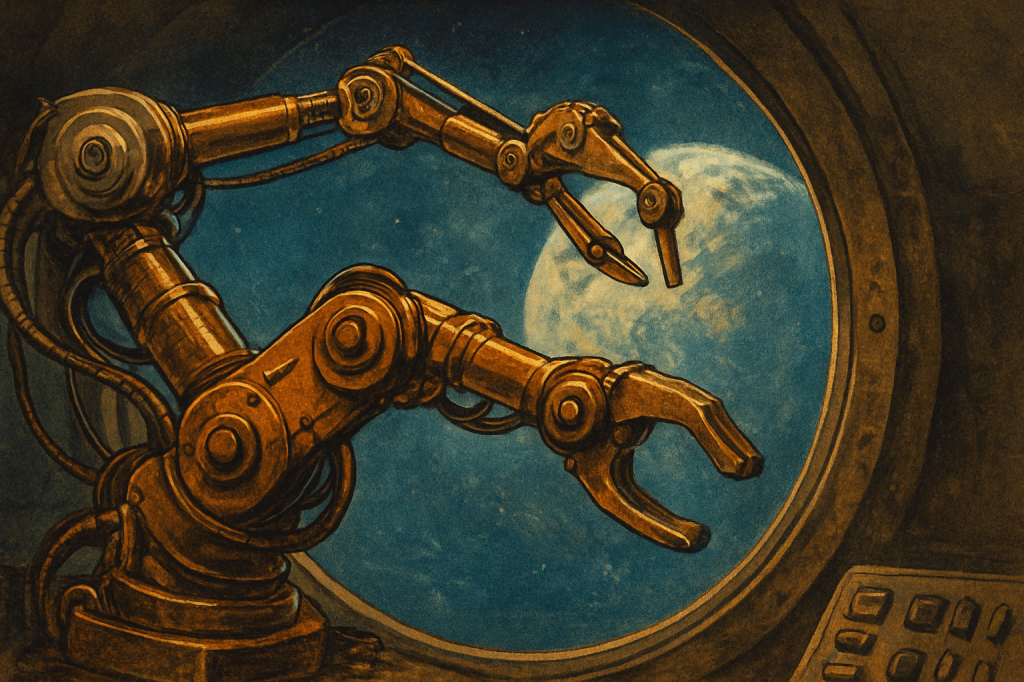
Waldo Jones is a genius inventor with myasthenia gravis, a condition that leaves him physically weak. So he creates a revolutionary solution: mechanical hands controlled remotely that amplify his movements. He operates these “waldoes” from his space station, manipulating objects on Earth with perfect precision. The technology lets him work without physical presence.
Sound familiar? Heinlein wrote this in 1942, decades before video conferencing existed. Yet he anticipated our entire remote work revolution. Waldo works from orbit, operating mechanical hands on Earth below. His physical location becomes irrelevant to his productivity.
The story explores something we’re grappling with today: when work becomes purely mental, does location matter? Waldo’s isolation initially seems liberating, then Heinlein shows the psychological cost. Cut off from human contact, Waldo becomes arrogant and antisocial. His technology solves one problem while creating others.
We’re living Waldo’s world now. Millions work remotely, collaborating through screens and digital tools. The pandemic accelerated what Heinlein saw coming: technology making physical presence optional. Like Waldo, we’re discovering that efficiency isn’t everything. Human connection requires more than bandwidth.
2. “The Roads Must Roll” (1940) – Infrastructure Dependency
In Heinlein’s world, massive conveyor belts carry people and goods across continents. These “roads” are the arteries of civilisation, moving millions at incredible speed. But the road engineers who maintain this system hold enormous power. When they strike, society grinds to a halt.
The story asks a question that feels urgent in 2025: what happens when critical infrastructure becomes so complex that only specialists understand it? Heinlein’s roads require constant maintenance and split-second decisions. The engineers know their society depends on them, and some decide to exploit that dependency.
Replace Heinlein’s roads with the internet, and the parallels become clear. We’ve built a civilisation dependent on systems most people don’t understand. Cloud servers, undersea cables, and data centres keep our world running. When they fail, everything stops.
The story’s labour conflict feels prophetic too. Tech workers hold increasing power because they maintain the digital infrastructure our society depends on. Heinlein saw that technical expertise would become political power. The people who keep the machines running ultimately control the machines.
3. “Solution Unsatisfactory” (1941) – Nuclear Deterrence
Heinlein’s America develops radioactive dust as a weapon, giving them ultimate military superiority. They use this power to enforce world peace, but the solution creates new problems. Other nations develop the same technology. Soon everyone has world-ending weapons, and peace depends on mutual fear.
Written months before Pearl Harbor, this story essentially predicted the Cold War. Heinlein saw that ultimate weapons would make war impossible and peace unstable. His “Pax Americana” enforced by radioactive dust became the real world’s nuclear deterrence.
The story’s title proves prophetic: the solution is genuinely unsatisfactory. Peace achieved through terror isn’t really peace. Heinlein understood that some technological achievements create permanent anxiety. Once nuclear weapons exist, they never really go away.
The tale anticipates our current dilemmas with emerging technologies. AI development, genetic engineering and cyber warfare create similar dynamics. First-mover advantages in dangerous technologies can destabilise everything. Heinlein showed us that some innovations solve immediate problems while creating eternal ones.
4. “All You Zombies” (1959) – Identity in the Digital Age
This time-travel story follows a character who becomes their own mother and father through temporal manipulation. The protagonist exists in multiple identities across different time periods, raising questions about what makes someone “real” when identity becomes fluid.
Heinlein couldn’t have imagined social media, but he grasped something essential about identity and technology. When people can reshape themselves, when the same person can exist in multiple forms, traditional notions of fixed identity break down.
Today’s digital natives understand this instinctively. They maintain different personas across platforms, carefully curating online identities. Gaming avatars, professional LinkedIn profiles and casual Instagram accounts can feel like entirely different people. Heinlein’s time traveller took this to its logical extreme.
The story also anticipated our anxieties about authenticity. If someone can be anyone online, how do we know who’s real? Dating apps, social media profiles and virtual relationships all raise questions Heinlein explored through science fiction metaphors.
5. “The Menace from Earth” (1957) – Cultural Evolution Through Technology
Holly lives on the Moon, where low gravity allows humans to fly with artificial wings. For her, flying is natural and normal. Earth visitors find it terrifying and unnatural. Technology hasn’t just given humans new abilities – it’s created new cultures and new ways of being human.
Heinlein understood that sufficiently advanced technology becomes invisible. For Holly, wings are simply part of her environment, as natural as walking. The Moon-born generation takes for granted what Earth-born humans find miraculous or disturbing.
We see this pattern everywhere now. Digital natives don’t “use” smartphones; they live with them. Social media isn’t technology to teenagers; it’s the social environment. Virtual relationships, online gaming and digital creativity are simply how culture works for post-internet generations.
The story also shows how technology creates cultural conflict. Holly’s Earth-born friend can’t adapt to lunar flying, just as older generations struggle with digital culture. Heinlein saw that technological change would create generational divides that feel almost like different species.
Heinlein understood that technology changes us as much as we change it. Every innovation reshapes human relationships, power structures and cultural values. These stories remain relevant because the pattern continues: we think we’re building better tools when actually we’re rebuilding ourselves.

Leave a comment