The most effective horror takes the ordinary fears we live with every day and pushes them just far enough to become unbearable. These seven stories prove that the scariest demons are the ones hiding in plain sight.
1. “Charles” by Shirley Jackson (1948)
Every parent knows this anxiety. Your sweet child comes home from school with stories about the class troublemaker. Day after day, you pump them for details while secretly worrying about bad influences. Jackson captures that familiar parental concern perfectly until she pulls the rug out from under you.
Laurie regales his parents with tales of Charles’s misbehaviour. He hits the teacher, disrupts story time, uses bad words. The parents react exactly as you’d expect: concern mixed with morbid curiosity. They want to meet Charles’s mother at the PTA meeting to see what kind of family produces such a child.
Jackson hides the truth in plain sight while letting us share the parents’ assumptions. The reveal shocks you, then makes you question everything you thought you understood about child psychology and parental awareness.
The horror isn’t supernatural. It’s the realisation that we might not know our own children as well as we think.
2. “Where Are You Going, Where Have You Been?” by Joyce Carol Oates (1966)
Fifteen-year-old Connie loves flirting with boys at the shopping plaza. Typical teenage stuff. Until Arnold Friend shows up at her door one summer afternoon while her family’s away.
Arnold knows things about Connie he shouldn’t know. He describes her family’s whereabouts with unsettling accuracy. His car changes colour depending on the light. His boots don’t seem to fit properly. Nothing adds up.
He’s every parent’s nightmare about teenage independence. The older boys your daughter talks to. The predators waiting for the moment we let our guard down.
Oates never shows us the violence, but the threat saturates every exchange.
3. “The Yellow Wallpaper” by Charlotte Perkins Gilman (1892)
Your doctor prescribes rest for your “nervous condition.” Your husband supports the treatment. You’re confined to a room with hideous yellow wallpaper while everyone insists it’s for your own good. Sounds helpful, doesn’t it?
The narrator slowly unravels as she’s isolated and dismissed by the men controlling her treatment. The wallpaper becomes her obsession. She sees patterns, movement, figures trapped behind the design. Her sanity deteriorates as her agency disappears.
Written over a century ago, but it still hits hard if you’ve ever been gaslit by medical professionals or family members. Watching your identity dissolve while people who claim to love you insist you’re getting better.
4. “A Good Man Is Hard to Find” by Flannery O’Connor (1953)
A family road trip to Florida. The grandmother comes along, parents in front, kids complaining in the backseat. They stop for barbecue, take a detour to see an old plantation house. Completely ordinary until they encounter The Misfit and his gang after a car accident.
We’ve all been on this car journey. O’Connor lulls you with familiar family dynamics, then violence erupts with shocking suddenness.
The Misfit is polite, philosophical, almost apologetic about what he has to do. That reasonableness makes him more terrifying than any raving lunatic. Evil wears good manners and speaks softly.
Family trips mean trusting strangers, taking unfamiliar roads, stopping in unknown places. O’Connor reminds us how quickly ordinary decisions can become fatal ones.
5. “The Landlady” by Roald Dahl (1959)
Billy Weaver needs accommodation. The bed and breakfast he’s drawn to looks perfect: cosy, cheap, run by a sweet old lady who’s been expecting him. She offers tea and biscuits, shows him to a lovely room, asks him to sign the guest book.
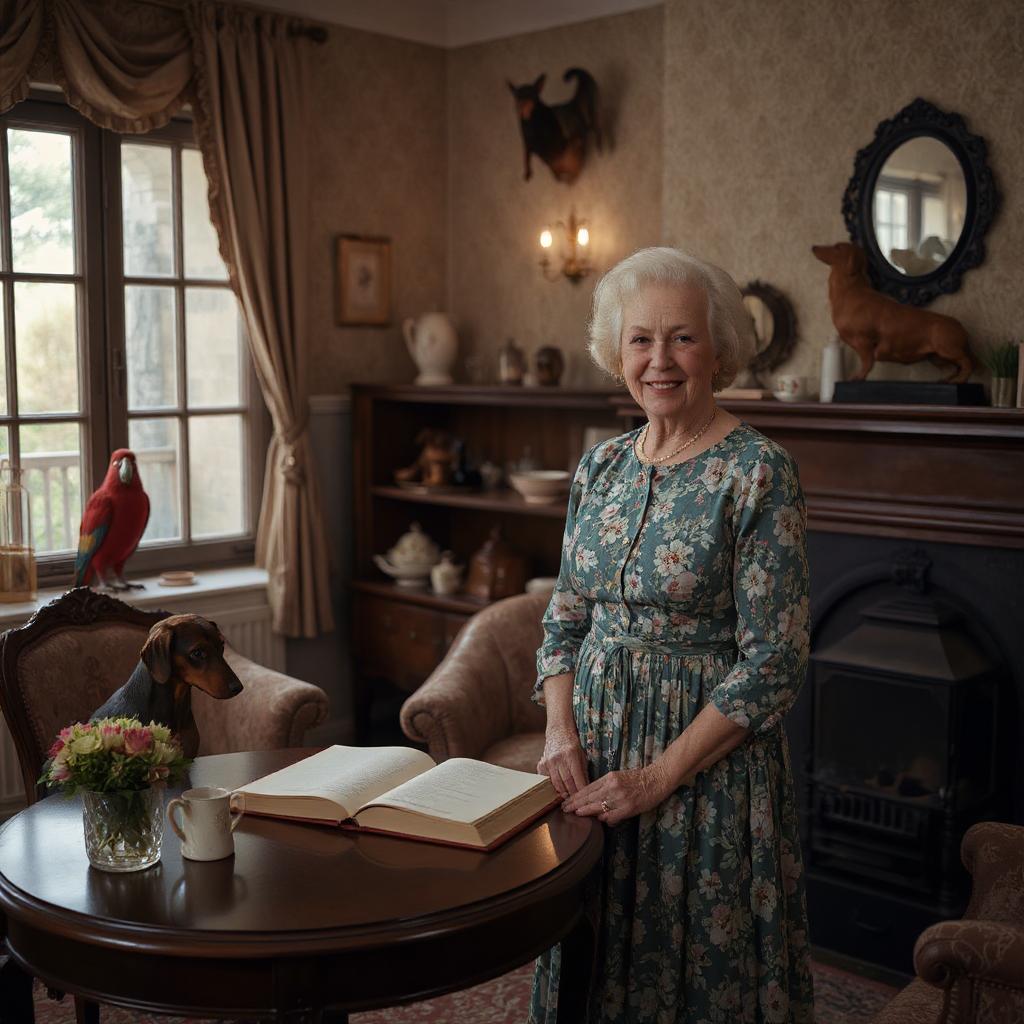
Dahl builds unease through hospitality. The landlady is almost too welcoming. The house smells strange. The guest book contains only two other names, both vaguely familiar. The stuffed animals look remarkably lifelike.
Every detail feels slightly wrong, but Billy ignores his instincts because the woman seems so harmless. We want to trust grandmotherly figures, even when something feels off. How many times have we stayed in unfamiliar places, trusting strangers because they seem nice? Predators know this.
6. “Gramma” by Stephen King (1984)
Eleven-year-old George has to stay alone with his bedridden grandmother while his mother rushes his brother to the hospital. Gramma barely moves, barely speaks, just lies there breathing heavily. But George knows there’s something wrong with her. Something dangerous.
Every child feels this way around very elderly relatives sometimes. That vague discomfort with mortality they can’t quite understand. King amplifies those feelings into something genuinely terrifying.
No adults to help, no one to tell him he’s being silly. Just a small boy alone with something that might not be entirely human anymore.
7. “The Specialty of the House” by Stanley Ellin (1948)
Sbirro’s restaurant serves the most exquisite meals in New York. The owner, Mr Sbirro, personally selects diners worthy of his special dish: Lamb Amirstan, available only once a month to a chosen few. The narrator feels honoured to be invited into this exclusive circle.
The horror comes through fine dining culture. Our fascination with culinary exclusivity, twisted into something monstrous.
Fellow diners go missing, but he’s too intoxicated by his special status to care. Vanity makes us complicit in our own destruction.
We trust chefs with our health every time we eat out. What if that trust is misplaced?
The most effective horror corrupts the familiar. These writers took ordinary situations we all navigate and revealed the dangers hiding just beneath the surface. Now try reading them late at night without checking your locks twice.

Leave a comment