Sunday Shorts takes you deeper into the darkness with stories that have the luxury of time and space. At over 1000 words, these longer tales allow the crafting of complete psychological journeys. The terror builds organically, from fully realised characters and more richly detailed worlds. Stories can be more developed (as in classic horror), taking time to establish atmosphere, set up relationships and explore the psychology of fear.
Stories in the Sunday Shorts series reflect the idea that the most effective horror sometimes comes from watching ordinary people navigate extraordinary circumstances. They are immersive experiences designed for those who want to lose themselves completely in a story, emerging changed by what they’ve witnessed. Perfect for those Sunday afternoons when you have time to savour every disturbing detail.
The Dinner Party
Catherine had spent three days preparing for their first dinner party in the new house. Six courses planned, wine pairings researched, conversation topics mentally rehearsed. She wanted everything perfect for Mark’s colleagues from the architecture firm.
“They’ll love the house,” Mark assured her, adjusting his tie in the hallway mirror. “Especially after Richard’s renovation disaster.”
Catherine frowned. “What renovation disaster?”
“The one where—” Mark paused, looking confused. “Sorry, I meant his promotion. The promotion he’s getting next month.”
The first guests arrived punctually at seven. The Masons—Richard and Jane—followed by the younger couple, Simon and Amanda, and finally Mark’s boss, Peter, alone as always.
“Lovely home,” Jane Mason said, accepting a glass of wine. “Much better than that terrible flat you’ll have to move back to.”
Catherine laughed politely. “Move back to?”
“After the divorce,” Jane continued matter-of-factly, then caught herself. “Oh, I’m sorry. I meant after you’ve settled in properly.”
An odd slip, but Catherine pushed it aside. Dinner party nerves affected everyone.
Over the starter, conversation flowed naturally. Simon praised the mushroom soup while Amanda complimented their choice of neighbourhood.
“Very quiet,” Amanda said. “Perfect for children. Though I suppose after what happens to little Oliver, you might prefer somewhere busier.”
Mark nearly choked on his wine. “We don’t have children, Claire.”
“Of course not,” she said, smiling brightly. “Not yet. The accident isn’t for another two years.”
An uncomfortable silence settled over the table. Catherine forced a laugh. “I think someone’s had too much wine already.”
But as she served the main course, the comments grew more pointed. Richard mentioned Mark’s upcoming redundancy. Peter casually referenced Catherine’s mother’s funeral—though her mother was perfectly healthy. Jane offered condolences for their marriage troubles, speaking as if they were common knowledge.
“I’m sure I misheard,” Catherine whispered to Mark in the kitchen. “They can’t all be so confused.”
Mark nodded, but his hands trembled as he opened another bottle. “Richard was very specific about the redundancy. He knew the exact date.”
Returning to the dining room, Catherine found their guests deep in conversation about the house fire.
“Electrical fault,” Simon was explaining. “The investigation concluded it started in the kitchen. Very sad.”
“When did you say this happened?” Catherine asked, trying to keep her voice steady.
“Next autumn,” Jane replied. “October thirteenth, I believe. You’re both very lucky to escape. Though of course, Mark doesn’t.”
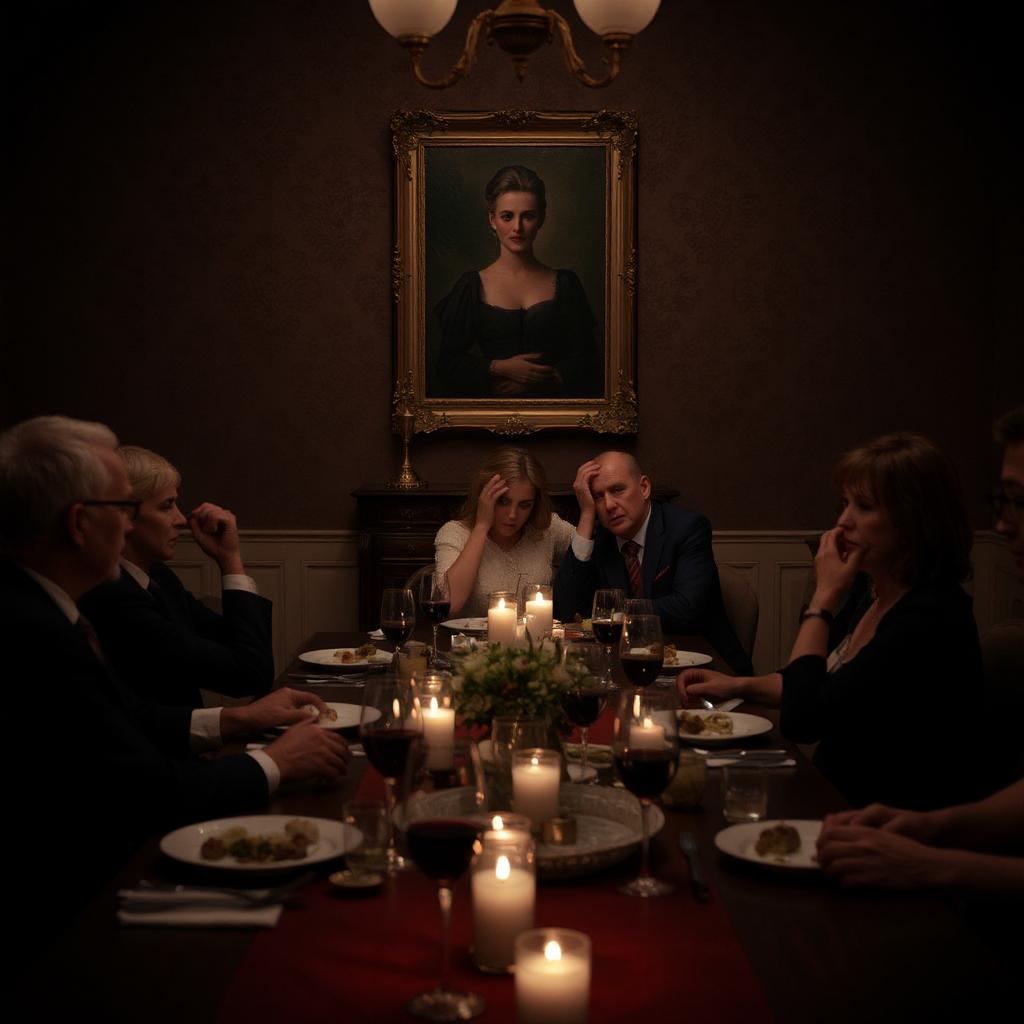
Catherine’s glass slipped from her fingers, shattering against the hardwood floor. The guests looked at her with sympathy.
“Don’t worry,” Peter said kindly. “The grief counselling helps eventually. Though I understand you never quite get over losing a spouse so young.”
Mark stood abruptly. “I think there’s been some misunderstanding—”
“About the cancer?” Amanda interrupted. “Oh no, that diagnosis is quite accurate. Stage four pancreatic. The doctors are very clear about the timeline.”
Catherine felt the room tilt. These people were discussing their lives—their futures—with the casual familiarity of established fact. But worse than their certainty was the growing realisation that everything felt inevitable.
“I think this evening needs to end,” she said. “Perhaps everyone should leave.”
“Oh, but you can’t leave yet,” Richard said, checking his watch. “The best part hasn’t happened.”
“What best part?” Mark demanded.
“When you realise,” Jane explained patiently, “that knowing your future doesn’t mean you can change it. That’s always the most interesting moment.”
Catherine tried to stand, but her legs wouldn’t obey. Around the table, their guests continued eating, discussing upcoming tragedies with the enthusiasm of sports commentators.
“The car accident is quite spectacular,” Simon was saying. “The investigators will blame the brakes, but of course, it’s really the stress. Mark will be driving too fast, trying to get to the hospital.”
“For my cancer treatment?” Catherine whispered.
“For the miscarriage,” Amanda corrected gently. “The cancer doesn’t develop until after you lose the baby. Grief affects the immune system terribly.”
Mark grabbed Catherine’s hand. “We’re leaving. Now.”
But when they tried to move toward the door, they found themselves returning to their seats. The conversation continued around them, an unstoppable tide of predetermined sorrow.
“The divorce papers are filed in eighteen months,” Peter noted. “Quite reasonable, considering the circumstances. No one blames Catherine for the affair.”
“I would never—” Catherine began.
“With the grief counsellor,” Jane added helpfully. “Dr Williams, I believe. Very understanding man. He’s helped so many widows.”
The room grew colder. Catherine noticed their guests’ faces were becoming less distinct, features blurring into generic pleasantness. Only their voices remained clear, cataloguing disaster after disaster with relentless precision.
“The second marriage is happier,” Amanda was saying. “Though brief. The cancer returns within the year.”
“And Mark’s estate?” Richard asked politely.
“Complications with the will. The family contests it. Very messy. Catherine ends up with nothing.”
Catherine wanted to scream, to run, to wake up from this nightmare masquerading as social evening. Instead, she found herself asking, “When does it end?”
“End?” Jane looked puzzled. “Oh, my dear, it doesn’t end. This is just the beginning.”
Their guests raised their glasses in a toast. The wine had turned the colour of blood.
“To the future,” Peter said solemnly. “And to the choices we think we’re making.”
Catherine and Mark lifted their glasses automatically, compelled by some force beyond their understanding. As the wine touched their lips, they tasted ash and knew with absolute certainty that every word they’d heard was true.
Outside, it began to rain—the first drops of the storm that would knock down the power lines, causing the electrical surge that would someday burn their house to the ground.
The dinner party continued long into the night, their guests discussing each approaching tragedy with increasing detail, while Catherine and Mark sat frozen in their chairs, perfect hosts to their own destruction.
When dawn finally broke, the guests were gone. Only the dirty dishes remained, and a note on the table written in Catherine’s own handwriting: “Thank you for a lovely evening. We must do this again soon.”
Catherine stared at the note, though she had no memory of writing it. In the margin, someone had drawn a small calendar. October thirteenth was circled in red.

Leave a comment