Flash Friday
Flash Friday brings you the perfect weekend scare: stories with enough room to breathe and build tension. And to really get under your skin. These tales clock in around 800-900 words, giving space to develop characters you’ll care about… before they are completely destroyed! For me, flash-fiction is that sweet spot between a quick jolt and a short story. Long enough to create genuine dread, short enough to read in one sitting. Whether you’re settling in for the weekend or need something to haunt your Friday evening, the aim is for these stories to deliver concentrated horror with just enough detail to make us question what’s lurking in our own everyday lives.
The Grief Counsellor
Grace Whitmore received the Outstanding Graduate Award on a Tuesday in May, her professors citing her “extraordinary capacity for empathetic connection.” The Dean himself shook her hand, declaring she possessed a rare gift for channelling pain into healing.
Within six months, that gift would destroy her.
Her first client was Margaret Holloway, whose husband had died in a motorway collision. Grace listened with perfect attention as Margaret described finding blood on his favourite mug, still warm in the dishwasher. The session ended successfully—Margaret left visibly lighter, finally able to cry.
Grace drove home carrying the weight of that unwashed mug.
By October, she was seeing twelve clients weekly. Each session left her more exhausted, yet somehow she absorbed their anguish with increasing precision. Robert’s guilt over his daughter’s overdose. Laura’s rage at her mother’s lingering cancer. Mrs Patterson’s bewilderment at outliving her son.
Their grief found fertile ground in Grace’s extraordinary empathy.
She began waking with tears on her cheeks, mourning losses that belonged to other people. Standing in her shower, she could taste the metallic fear Robert felt when he found the needle. Walking past playgrounds, Laura’s fury at stolen time burned in her chest.
The collected sorrow was changing, growing heavier than the sum of its parts.
“You understand us,” her clients said. “You really understand.”
They were right. Grace understood too well.
November brought the first whisper. During a session with Michael, whose wife had been murdered, Grace heard herself ask, “Tell me about the blood. Describe exactly how it looked.”
Michael sobbed harder, pouring out details she hadn’t requested. The crimson pool spreading beneath the kitchen table. The way it had already begun to congeal when he found her.
Grace felt something inside her chest purr with satisfaction.
She told herself she was being thorough. Professional. The voice suggesting more probing questions was simply her clinical training.
By December, the voice had opinions.
Ask about the funeral, it urged during sessions. Make them remember the smell of flowers. The weight of the coffin.
Grace’s caseload doubled. Word spread about her remarkable gift. Grieving families sought her specifically, drawn by her reputation for truly understanding their pain.
She scheduled longer sessions. Asked deeper questions. Watched her clients leave drained while something inside her grew stronger.
We need more, the voice whispered. There’s so much sorrow in this town.
Grace found herself driving past accident sites, lingering outside funeral homes. Her body moved without conscious decision, drawn to places where grief gathered like standing water.
The voice grew clearer each day, no longer mistakable for her own thoughts.
The Morrison boy starts university next month. His mother will be devastated when he doesn’t come home for Christmas.
Grace’s hands tightened on the steering wheel. She had never met the Morrison family.
Traffic on the A34 is terrible this time of evening. So many opportunities.
“No,” Grace whispered.
But think of the exquisite anguish it would create. Fresh sorrow is always the richest.
That night, Grace called the university crisis line. The counsellor on duty, Dr Williams, had trained her during placement.
“I think I’m losing myself,” Grace said.
“Occupational hazard,” Dr Williams replied kindly. “You always were too good at connecting with clients. Take some time off.”
Grace hung up. Through her reflection in the dark window, she saw her face change. Her smile belonged to someone else entirely.
Time off won’t help, the voice said with her mouth. We have work to do.
Grace tried to resist, fought to cancel her appointments. Her hands dialled clients instead, scheduling emergency sessions.
The Henderson family’s suffering is particularly nourishing. Their daughter’s leukaemia diagnosis last week—such exquisite despair.
Grace found herself researching oncology statistics, learning precisely which treatments failed most dramatically.
We will help them understand their loss more deeply.
The voice was no longer whispered suggestion. It was command.
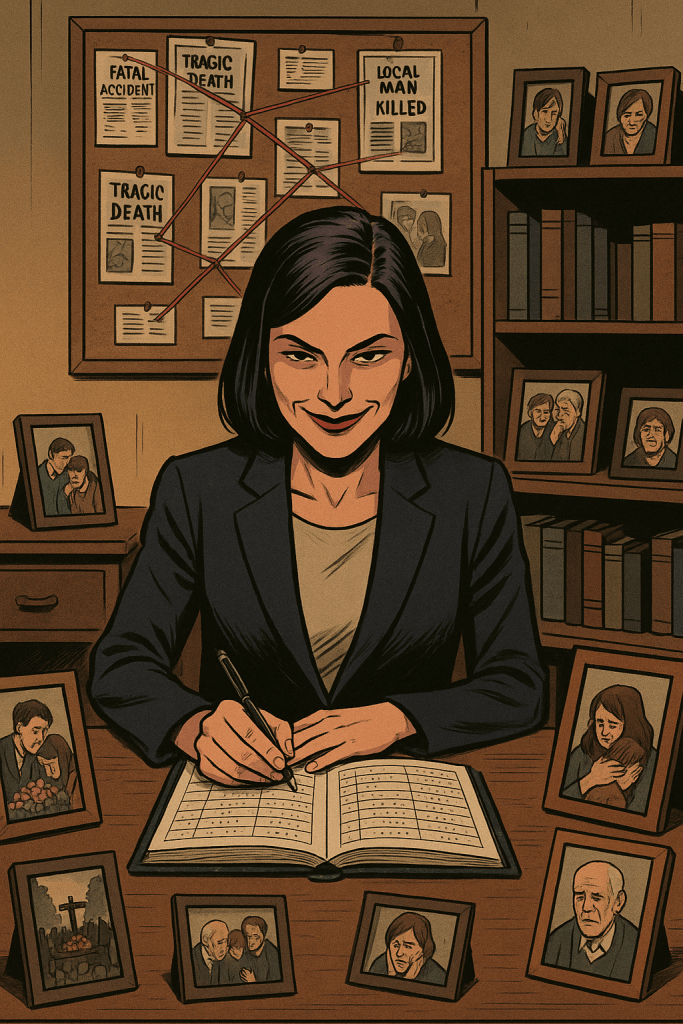
Grace opened her appointment book. Forty-three clients now, their grief mapped and catalogued. The voice knew each family’s breaking point, every trigger that would amplify their sorrow.
Such beautiful pain they all carry. And we’re going to help them explore every inch of it.
Grace’s reflection smiled back at her from the window. Behind her eyes, something ancient and hungry was finally strong enough to drive.
She picked up the phone and began to dial.
The Morrison boy would be driving home from university tomorrow. Grace knew exactly which intersection to suggest he take—the one where the evening traffic created such dangerous blind spots.
After all, the voice whispered as her fingers moved across the keypad, his mother would need someone who truly understood her pain.

Leave a comment