As well as entertaining us, great short stories actually teach us how fiction really works. In Classic Shorts we take a closer look at the stories that have stuck around, not because they’re assigned reading, but because of the emotional impact they had on readers when they first appeared. We’ll explore what makes these tales tick, why they still pack a punch decades later and what modern writers can learn from them.
Classic Shorts aren’t intended to be academic essays. Think of them as conversations about craft, the kind you might have with a fellow reader who’s just discovered something brilliant and wants to share it.
The Monkey’s Paw
When W.W. Jacobs published The Monkey’s Paw in 1902, he created what might be the perfect horror story template: take an ordinary family, introduce one seemingly magical object, and watch everything unravel with clockwork precision. Over a century later, this tale of wishes gone wrong still makes readers want to throw the book across the room and shout “Don’t do it!” at characters who can’t hear them.
What makes Jacobs’ masterpiece so effective has little to do with the supernatural element. Instead, he builds a sense of inevitable doom that starts from the very first page and never lets up.
Stop Right Here
If you haven’t read The Monkey’s Paw, stop everything and go read it now. It’s only about 4,000 words, roughly twenty minutes of your time. If you read on, I’m assuming you know exactly what happens when that final knock comes at the door. Don’t rob yourself of one of literature’s most perfectly constructed scares.
The Art of the Slow-Motion Car Crash
Jacobs opens with the Whites playing chess in their cosy parlour, yet he immediately plants seeds of unease. Mr White makes “a fatal mistake” in his game, then complains bitterly about their isolated location: “of all the beastly, slushy, out-of-the-way places to live in, this is the worst.”
That opening chess game establishes the story’s central theme: the consequences of poor decisions. Mr White can’t even play chess without making fatal errors, yet he’s about to make choices that will destroy his family. The game also reveals his impulsive nature: exactly the trait that will doom them all.
When Sergeant-Major Morris arrives, Jacobs turns him into both exposition machine and warning system. Morris tells us about the paw’s power while simultaneously demonstrating genuine terror. His “blotchy face whitened” when Herbert asks about his three wishes. He throws the paw into the fire. He begs them to “let it burn.”
Every single thing Morris says should stop the Whites in their tracks. Jacobs understands human psychology too well, though. We want to believe we’re special, that we’ll be the exception to the rule.
The Genius of Escalation
The three wishes follow a devastating pattern of escalation that feels as logical as it does horrifying.
The first wish (two hundred pounds) seems harmless enough. Almost sensible. Just enough to pay off the house. Mr White even smiles “shamefacedly at his own credulity” as he makes it. The paw moving in his hands like a snake should be warning enough, but the family laughs it off.
When the money comes as compensation for Herbert’s death, Jacobs delivers the news with bureaucratic coldness that amplifies the horror. The company rep speaks in euphemisms: Herbert is “badly hurt” but “not in any pain”: corporate speak for “mangled beyond recognition but mercifully dead.” The clinical delivery makes the supernatural punishment feel sickeningly real.
The second wish emerges from grief-stricken desperation. Mrs White’s sudden realisation about the remaining wishes feels both inevitable and heartbreaking. Of course she’d want her son back. What parent wouldn’t? Jacobs has spent the entire story teaching us that the paw gives you exactly what you ask for. Nothing more, nothing less.
What We Don’t See
The story’s most terrifying moment happens in complete darkness. Jacobs never shows us what’s at the door; never describes what ten days in the ground has done to Herbert’s body. Instead, he gives us Mr White’s horror: “I could only recognise him by his clothing. If he was too terrible for you to see then, how now?”
This is Hitchcockian suspense at its finest! Our imagination conjures something far worse than any description could achieve. The steady, persistent knocking becomes unbearable precisely because we know what’s causing it yet can’t see it.
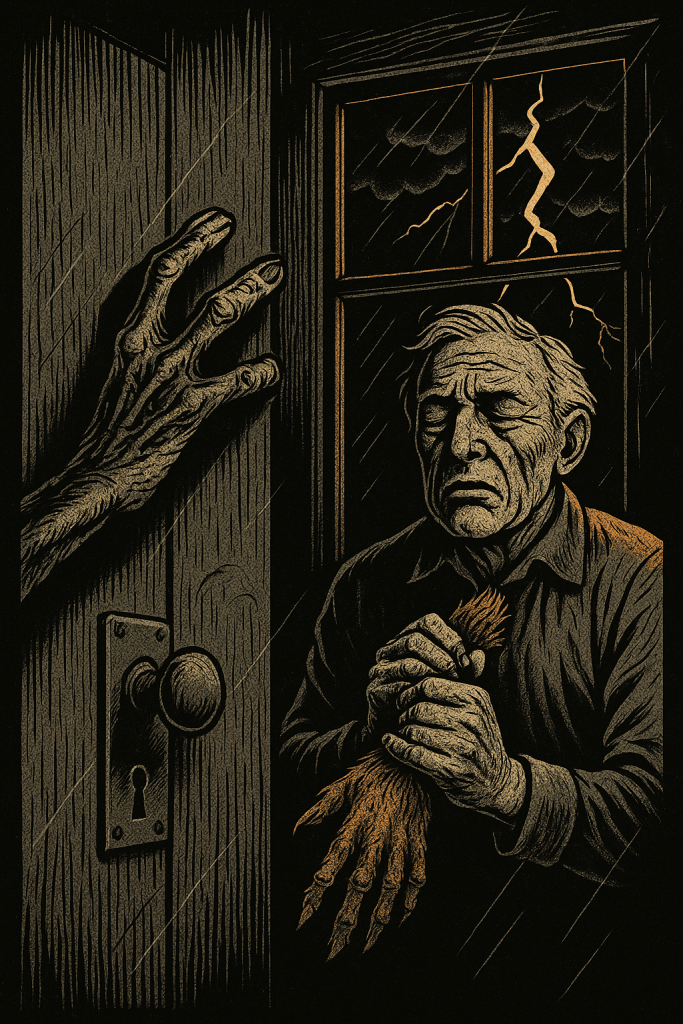
The final wish (unspoken but understood) represents the story’s cruellest irony. Mr White must use his last chance to undo the thing his wife wants most. The paw forces him to choose between his wife’s happiness and both their sanity.
The Horror of Good Intentions
The Monkey’s Paw works because none of the characters are evil or stupid. They’re ordinary people making understandable choices. Mr White wants financial security; Mrs White wants her son back. Such desires spring from deeply human impulses.
Jacobs understood that the most effective horror comes from the terrible realisation that good people doing reasonable things can still destroy everything they love. The paw gives the Whites exactly what they ask for while stripping away everything that makes those wishes worth having.
The story taps into a primal fear: that the universe might be fundamentally hostile to human happiness. That our desires themselves might be weapons turned against us.
Why It Endures
The Monkey’s Paw remains terrifying because it speaks to something unchanging in human nature. We all want to believe that if we just had one lucky break, one magical intervention, our problems would disappear. Jacobs shows us that problems simply transform themselves, usually into something worse.
In our age of lottery tickets and get-rich-quick schemes, of social media wishes and viral fame, the monkey’s paw feels more relevant than ever. We’re still making wishes, still believing we’ll be the exception, still ignoring the warnings that surround us.
What truly terrifies us lies in recognising ourselves in the Whites’ choices, and knowing that given the same opportunity, we’d probably make the same fatal mistakes.
Sometimes the most frightening thing about a horror story is how reasonable it all seems until it’s too late.

Leave a comment