The Procedure explores one of our most fundamental fears: losing control of our own bodies and voices when we need them most. Many of us will have experienced that vulnerability of being a patient—lying on an examination table, trusting medical professionals with our lives, hoping that our bodies will cooperate when it matters.
In this story I wanted to take that universal anxiety and push it into more horrifying territory. What if the one sense that medical science tells us persists longest—our hearing—becomes a curse rather than a comfort? What if consciousness doesn’t switch off like a light, but lingers in ways that medicine can’t detect?
The Procedure
“Count backwards from ten for me, Claire.”
Ten. Nine. Eight. The anaesthetist’s voice grows distant. Seven. Six. The operating theatre lights blur into warmth. Five. Four. Safe hands, I think. Three. Two…
Silence.
Then voices, but different ones. Urgent. Professional.
“Still no pulse.”
“How long has it been?”
“Eighteen minutes.”
I try to speak, to move, to open my eyes. Nothing responds. My body feels distant, disconnected, but my mind burns with clarity. The heart monitor’s steady tone pierces through everything—that terrible, flat line sound.
“Time of death: 14:47.”
No. NO. I’m here. I’m listening. I can hear everything.
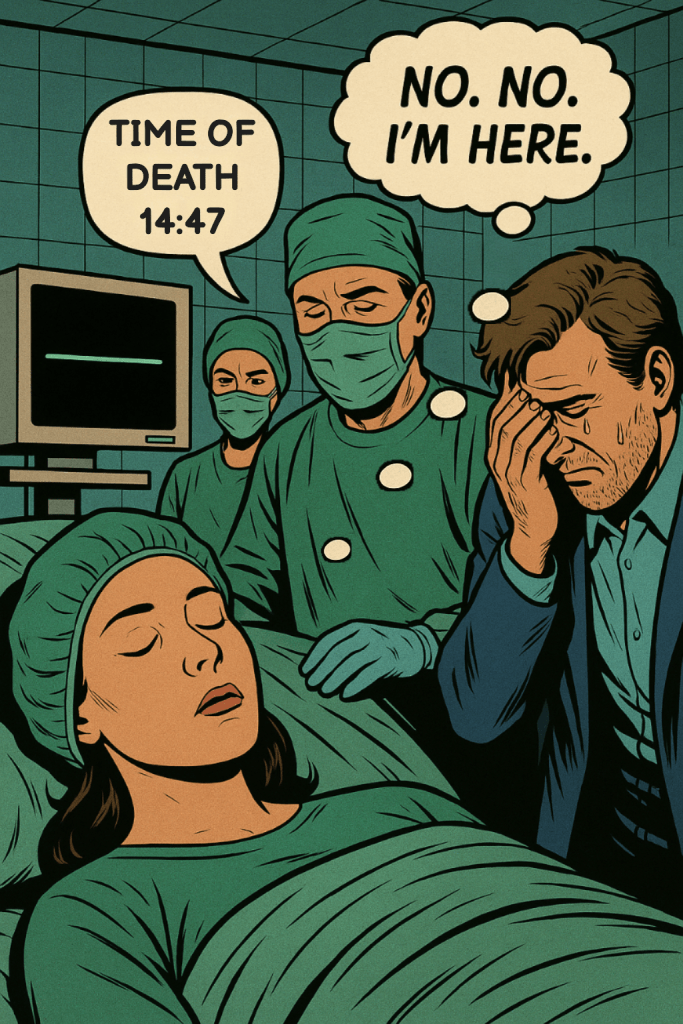
“Claire, I’m sorry,” Dr. Martinez says gently. “We did everything we could.”
My husband’s sob cuts through the clinical atmosphere. I want to comfort him, to tell him I’m still here, but my body won’t obey a single command.
“She’s on the organ donor register,” someone mentions. “We should contact the coordinator.”
Footsteps. Hushed conversations. Medical terminology floating around my paralysed form.
“The recipient’s already in theatre three,” a new voice says. “Cardiac team is ready. We need to move quickly—the heart’s still viable.”
Still viable? Because it’s still beating. Because I’m still alive!
“Her husband’s signed the consent forms,” Dr. Martinez confirms. “A young woman in Cardiff will have her life back because of Claire’s generosity and her husband’s consent.”
They wheel me away from the operating theatre where I was supposed to wake up. Instead, I’m heading to another one. The heart monitor they’ve disconnected was wrong—or maybe they just can’t hear what I can hear.
“Prep the donor,” someone calls ahead.
The operating lights above me are different now. Brighter. More focused. I hear the snap of surgical gloves, the metallic clink of instruments being arranged.
“Beautiful heart,” a surgeon comments, looking at my chart. “Twenty-eight years old, no history of cardiac issues. The recipient’s incredibly lucky.”
Lucky!
“Scalpel,” the surgeon says.
I feel the cold touch of metal against my chest.


Leave a comment