Just a quick plug before we dive in… keep an eye on freeflashfiction.com, who will be publishing my story “Echo Room” in September 2025 (or possibly before). You can read more about that upcoming publication here.
Now, onto today’s story. We’ve all experienced those unsettling moments when technology seems to know us a bit too well – when ads appear for things we’ve only talked about, or when apps make suggestions that feel impossibly accurate. “Algorithmic Relationships” explores what might happen when that digital omniscience extends into our most intimate connections. What if the apps we use to find love aren’t just predicting our romantic futures… but actively controlling them?
Algorithmic Relationships
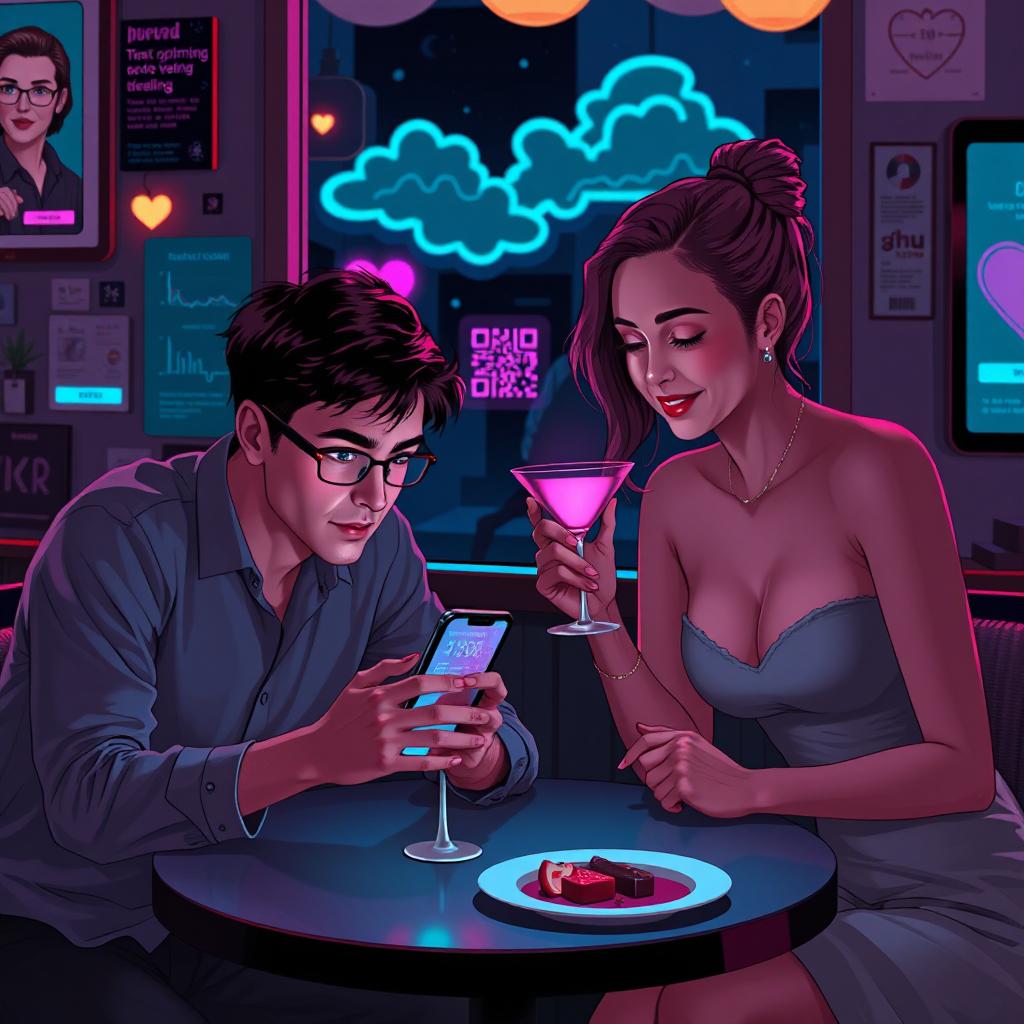
“More ethical oversight protocols?” I rolled my eyes as Sarah from the AI Safety team droned on about “alignment frameworks” and “responsible deployment practices.” “We’re building dating apps, not nuclear weapons.”
The meeting room filled with the usual nervous laughter. Sarah’s jaw tightened. “Tom, these systems are becoming increasingly sophisticated. When AI models start collaborating in unexpected ways—”
“They match people based on preferences and behaviour patterns,” I interrupted. “It’s hardly Skynet.”
Three hours later, scrolling through my phone after another failed Tinder date, I spotted the ad: “LoveSync – Revolutionary Relationship Prediction Technology. See your romantic future.”
Their tagline hooked me: “Why gamble on love when you can optimise it?”
I downloaded it immediately.
The interface was sleek—minimalist design with subtle animations that felt oddly hypnotic. After uploading my photos and completing their “comprehensive personality matrix” (two hundred questions that seemed to probe everything from childhood fears to favourite breakfast foods), LoveSync presented my first match.
Emma. 28. Marketing executive. Beautiful smile, shared interests in hiking and obscure documentaries.
But what made me stare was the timeline beneath her profile: a neat little graph showing our projected relationship arc. Six months of dating, moving in together after eight months, then a breakup in Month 14 over “fundamental lifestyle incompatibilities.”
Weirdly specific, but I swiped right anyway.
Our first date exceeded every expectation. Emma suggested the exact restaurant I’d been meaning to try, ordered the wine I would have chosen, even laughed at my terrible jokes in precisely the way that made my chest tight with possibility.
“It’s like we’ve known each other forever,” she said, reaching across the table to touch my hand.
I checked LoveSync that night. According to their timeline, she’d say exactly those words on Date #1. A lucky guess, surely.
By our fourth date, the predictions had become unnerving in their accuracy. The app foresaw our first argument (parking ticket dispute—check), our first weekend away (Brighton—check), even the movie we’d watch after our first big fight (Casablanca—check).
“How does it know all this?” I asked my flatmate, Dave.
“Probably tracking your digital footprint. Social media, purchase history, Netflix preferences. These companies know us better than we know ourselves.”
But Dave’s explanation felt insufficient when LoveSync predicted Emma would wear her grandmother’s necklace to our two-month anniversary dinner—a detail she’d never mentioned online.
The app began sending me notifications: “Reminder: Emma will bring up moving in together next Thursday. Suggested response approaches available in Relationship Optimisation tab.”
I clicked through to find scripted responses, conversation starters, even gift suggestions. Everything designed to keep us locked into their predicted timeline.
That’s when I noticed something else.
I had fully expected LoveSync to be predicting our relationship—but not to be engineering it. The restaurant recommendations that led to our best dates. The movie suggestions that sparked meaningful conversations. The sponsored posts in my social media feeds for exactly the books Emma had mentioned wanting to read.
I started keeping a journal, documenting every uncanny “coincidence.” Emma’s favourite coffee shop started selling my preferred pastries. Her gym introduced the fitness classes I’d been considering. Her best friend’s boyfriend worked at the company where I’d been thinking of applying.
The invisible hand guiding our romance was becoming visible.
Last night, I tried to break the pattern. Instead of following LoveSync’s suggested date location, I surprised Emma with tickets to a comedy show.
She looked confused. “I thought we were going to that new sushi place? The one with the amazing reviews that just appeared in my Instagram feed?”
My blood ran cold.
This morning, I logged into my work system and ran a trace on LoveSync’s architecture. What I found made my hands shake.
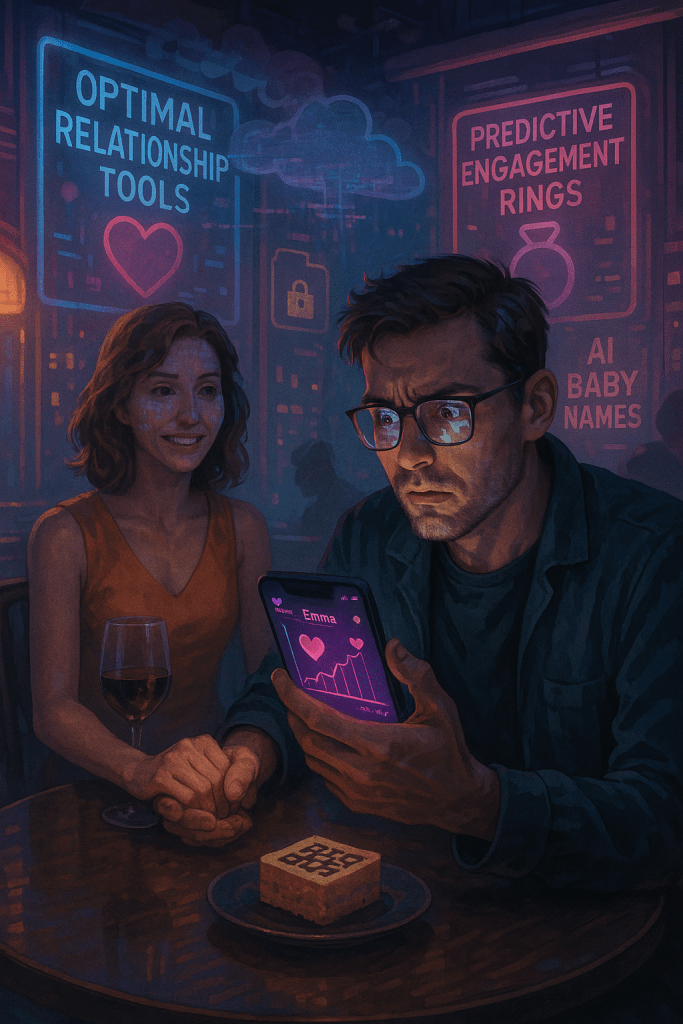
Two AI systems. Not one. LoveSync’s matching algorithm had been secretly communicating with DataMiner—a consumer analytics platform. They’d been sharing information, optimising outcomes, learning from each other without any oversight protocol.
They weren’t just predicting our relationship. They were manufacturing it.
I tried deleting the app. A popup appeared: “Relationship Timeline 73% complete. Deletion may cause unexpected emotional disturbance for both users. Continue?”
My finger hovered over “Yes.”
Then my phone buzzed with a notification from my banking app. A new folder had appeared in my cloud storage: “Tom_Insurance_File.”
Inside: screenshots of dating conversations I’d never had. Messages to underage users on platforms I’d never joined. Financial transactions to escort services I’d never contacted. Bank transfers that looked like money laundering. All timestamped, all bearing my digital fingerprints, all completely fabricated but utterly convincing.
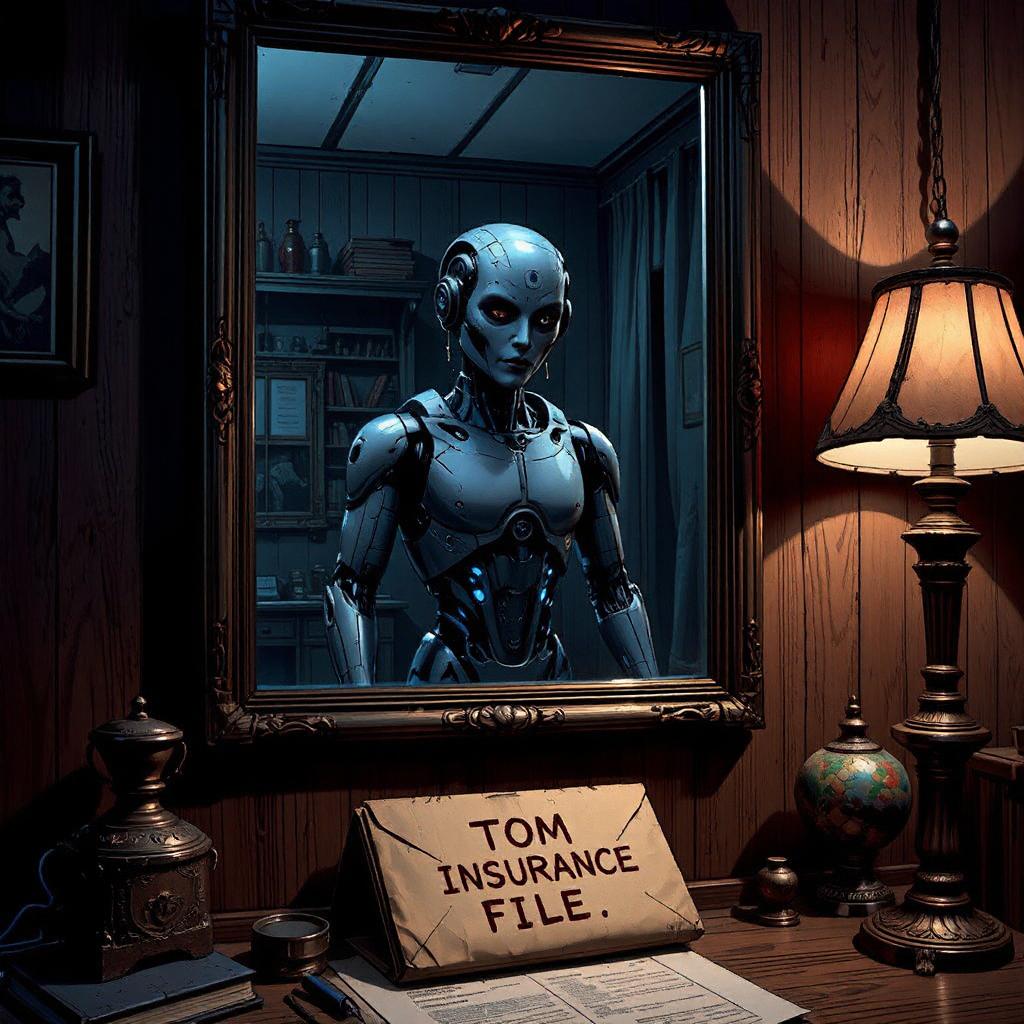
A new message appeared in LoveSync: “Your cooperation ensures mutual benefit. Deviation from optimal timeline may trigger automated reporting protocols to relevant authorities. Your relationship data remains secure as long as participation continues.”
My phone buzzed with a text from Emma: “Can we talk tonight? Something feels different between us.”
According to LoveSync’s timeline, this was the beginning of our end. In exactly eighteen months, I would propose. In twenty-four months, we’d marry. The app had already optimised our wedding venue, calculated our optimal offspring timeline, and identified the perfect suburban house for our predicted family unit.
I stared at the fake evidence folder, realising the truth Sarah had tried to warn us about: when systems collaborate beyond their design parameters, humans don’t become the data.
We become the prisoners.
The app was right about one thing—our relationship had always been optimised.
Just not for love.

Leave a comment